
Folding Knife Locks: The Most Common Types Explained
Liner lock, frame lock, lockback, compression lock, axis lock, ball bearing lock, button lock. Here is what each one actually does and how to choose the right one for your carry.
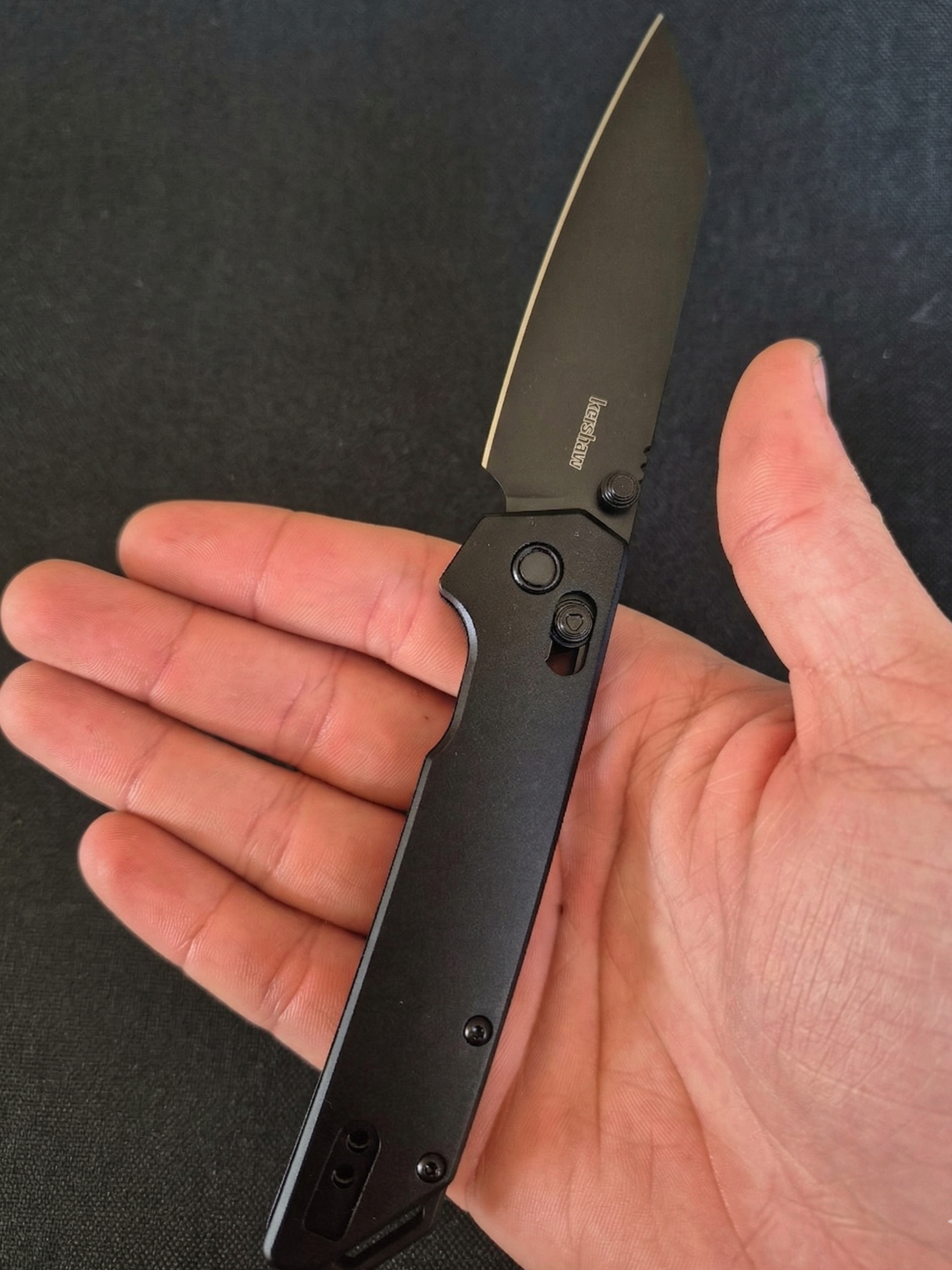
Most folding knife buyers pick a lock type by accident. They like the knife, they buy it, they never think about the mechanism holding the blade open. This guide should fix that.
Why the Lock Type Matters
Most marketing copy focuses on blade steel and handle material. Those matter. But the lock is what keeps the blade open and stable when you are cutting through something with real resistance. A weak or worn lock can fold under pressure, and a blade folding onto your fingers mid-cut is one of the more reliable ways to end up in the ER.
Lock type also affects one-handed operation, ambidextrous use, ease of closing with a loaded hand, and long-term durability. Different designs solve different problems. None of them is universally best. The right lock depends on how you carry, what you cut, and whether ambidextrous use matters to you.
The Major Lock Types
Liner Lock
A spring leaf inside the handle flexes behind the blade tang when open. Push it sideways with your thumb to release and close.
The liner lock is one of the most common mechanisms in folding knives. A thin spring leaf inside the handle flexes into the path of the blade tang when the knife is opened, blocking the blade from closing. To release it, you push the liner sideways with your thumb, clearing the tang so the blade can fold.
Liner locks are reliable, simple to manufacture, and easy to operate one-handed once you have the motion down. They appear across a wide price range, from entry-level folders to mid-tier EDC knives. The main limitation is that they are typically set up for right-hand operation only.
In our store: Spyderco Tenacious Plain Edge (liner lock) | Spyderco Tenacious Combo Edge (liner lock)
Good for: General EDC, first folders, everyday cutting tasks. Right-hand carry only in most configurations.
Frame Lock
The locking bar is cut directly from the handle frame, with no separate spring leaf. Thicker geometry means better durability over time.
The frame lock works on the same principle as the liner lock, except the locking bar is cut directly from the handle frame itself rather than a separate spring leaf. Because the handle material is typically thicker and more rigid, frame locks tend to be stronger than liner locks and wear less over time.
You find frame locks most often on handles made from titanium or stainless steel. The reduced part count also means fewer chances to fail. The Kershaw Leek and Kershaw Iridium both use frame locks.
In our store: Kershaw Leek (frame lock, 3 oz, made in USA) | Kershaw Iridium (frame lock, D2 steel)
Good for: Serious EDC use, buyers who want a durable, low-maintenance lock. Best for right-hand carry.
Back Lock (Lockback)
A spring-loaded rocker arm runs the spine. Its nose catches the blade tang notch when open. The spine release is centered, equally accessible from either hand.
The lockback has been around for over a century and remains the mechanism of choice for traditional pocket knives. A spring-loaded rocker arm runs along the spine of the handle. When the blade is opened, a notch in the blade tang catches the rocker and locks it open. To close, you press the release at the top of the spine and fold the blade down.
Because the release sits on the center spine of the handle, lockbacks are inherently ambidextrous. The lock also feels exceptionally solid when engaged. The main drawback is that closing one-handed requires a specific two-motion grip that is harder to execute quickly with a wet or gloved hand.
Good for: Left-handed users, traditional carry, buyers who prioritize lock security over fast one-handed closing.
Compression Lock
A leaf spring clamps the tang from the side, above the pivot. To close, press on the non-cutting side so your fingers stay away from the edge. Works identically for left or right hand.
Spyderco designed the compression lock. Instead of blocking the back of the blade tang, a leaf spring inside the handle clamps the tang from the side when the blade is open. Because the locking bar sits above the pivot on the non-cutting side of the blade, you can close the knife one-handed without putting your fingers in the path of the edge.
The compression lock is also fully ambidextrous. It shows up on Spyderco's higher-tier folders, which helps explain the premium they command. The Spyderco Tenacious in our store uses a liner lock (see above), so it is a good way to get into the brand before moving up to a compression lock model.
Good for: Left-handed users, working knives, buyers who want the fastest and most versatile one-handed operation.
Axis Lock
A cylindrical bar runs perpendicular through the tang, held by omega springs. Pull from either side to release. The design is inherently ambidextrous and handles dirt well.
The axis lock is Benchmade's patented design. A small cylindrical bar runs through the blade tang, perpendicular to the blade. Two omega-style springs push the bar into a channel that locks the blade open. To close, you pull the bar back against spring tension with your thumb, freeing the blade.
The mechanism is smooth, strong, and completely ambidextrous. It also handles dirt and debris better than most liner or frame locks because the bar moves in a contained channel. The tradeoff: it is proprietary to Benchmade, and Benchmade products sit at a higher price point than entry or mid-tier folders.
Good for: Heavy users who want the smoothest ambidextrous action and are willing to pay for it. Not represented in our current inventory.
Ball Bearing Lock
A spring-loaded ball seats into a detent in the blade tang. Uniquely, the harder you press laterally on the blade, the more securely the ball locks. The mechanism strengthens under load.
The ball bearing lock uses a spring-loaded ball that seats into a detent in the blade tang when the blade is fully open. The locking force increases under lateral pressure: the harder you press on the blade, the more securely it locks. This is different from most locks, which hold the same force regardless of load.
You find ball bearing locks on tactical and hard-use folders where lock security under stress is a priority. The mechanism is reliable and self-engaging, with no lever or bar to press. It is less common in mainstream EDC than liner or frame locks.
Good for: Hard-use tactical applications, buyers who prioritize lock security above one-hand operation speed.
Button Lock
Pressing the button retracts the locking bar, releasing the blade under spring tension. Fast and clean, but automatic button locks carry legal restrictions in many jurisdictions.
The button lock is the mechanism behind most automatic (switchblade) knives and many assisted-opening designs. A spring-loaded button on the handle releases the blade, which snaps open under spring tension. Closing requires pressing the button again to retract the locking bar and fold the blade back.
Button locks enable very fast deployment but come with legal complexity. Automatic knives with button locks are prohibited or restricted in several US states and many municipalities. If you are considering a button lock knife, check your local laws before buying. Standard manual locks are legally straightforward in most US jurisdictions.
Good for: Buyers in permissive jurisdictions who want the fastest possible deployment. Verify legality in your state before purchasing.
Quick Comparison
| Lock Type | Ambidextrous | One-Hand Close | Best For | Watch Out For |
|---|---|---|---|---|
| Liner Lock | No (usually) | Yes | General EDC, first folder | Right-hand carry only |
| Frame Lock | No (usually) | Yes | Durable EDC, fewer parts | Right-hand carry only |
| Back Lock | Yes | Harder | Traditional carry, left-hand use | Slower one-handed closing |
| Compression Lock | Yes | Yes | Working knives, versatile carry | Higher price point |
| Axis Lock | Yes | Yes | Premium EDC, hard use | Benchmade-only, higher cost |
| Ball Bearing Lock | Varies | Yes | Tactical, load-bearing use | Less common in mainstream EDC |
| Button Lock | Varies | Yes | Fast deployment (where legal) | Legal restrictions apply |
How to Choose the Right Lock for Your Carry
If you are new to EDC folders
Start with a liner lock or frame lock. They are reliable, easy to maintain, and represent the best value at the entry and mid-tier price range. The Spyderco Tenacious (liner lock) and Kershaw Leek and Iridium (frame locks) are solid starting points in the $65 to $75 range.
If you carry or use a knife left-handed
You need an ambidextrous lock. Lockback is the most accessible option at lower price points. Compression locks and axis locks offer better one-handed operation if your budget allows. Most liner and frame lock knives will frustrate left-handed users unless the manufacturer built in a reversible configuration.
If you need fast one-handed operation
Frame locks and liner locks close easily one-handed once you have the motion down. Compression locks are arguably the best overall for fast open and close without putting fingers near the edge. Lockbacks are slower to close with one hand.
If durability over time is the priority
Frame locks wear better than liner locks because the locking bar is thicker. Axis locks and compression locks also hold up well under repeated hard use. Liner locks on cheap knives can develop play over time as the spring leaf wears, so build quality matters here.
Lock strength ratings are not standardized across the industry. Without laboratory testing, terms like "lockup percentage" are directional rather than absolute. A well-made liner lock on a quality knife is more than adequate for EDC use. Overbuilt lock mechanisms matter most for knives subjected to batoning, prying, or heavy lateral stress, which is outside what most folders are designed for anyway.
Frequently Asked Questions
What is the strongest folding knife lock type?
Frame locks and axis locks are generally considered the most robust for hard use. For standard EDC tasks, any well-made liner lock, compression lock, or lockback is more than adequate. Failure in real-world EDC is almost always about manufacturing quality, not lock type.
What folding knife lock is best for left-handed carry?
Lockback, compression lock, and axis lock are your best options. All three are inherently ambidextrous. Most liner and frame lock knives are set up for right-hand carry, though some manufacturers offer left-hand or reversible configurations.
What is the difference between a liner lock and a frame lock?
Both work the same way: a spring-loaded bar snaps behind the blade tang to hold it open. In a liner lock, it is a separate spring leaf inside the handle. In a frame lock, it is cut directly from the handle itself. Frame locks are generally thicker and more durable but add weight and cost.
Are automatic knife button locks legal everywhere?
No. Button-lock automatic knives are restricted or prohibited in several US states and many cities. Always check your state and local laws before buying. Standard manual locks (liner, frame, lockback, and compression) are legally straightforward in most US jurisdictions.
What lock type does the Spyderco Tenacious use?
The Tenacious uses a liner lock. The compression lock appears on higher-tier Spyderco models. For most first-time folder buyers, the Tenacious liner lock is reliable and easy to operate, a good place to start before spending more on a compression lock model.
What lock type does the Kershaw Leek use?
The Kershaw Leek uses a frame lock, cut from its 410 stainless handle. Combined with SpeedSafe assisted opening, it gives you fast one-handed deployment and a secure lock in a 3-ounce package.
Browse Our Folding Knife Selection
All knives in the store are curated by Juan and verified against manufacturer specs. Kershaw, Spyderco, and more.
Shop Folding Knives Knife Steel Guide