
Stop Using Your Phone Light: The Complete EDC Flashlight Guide
Written by Juan Arango
Former Colombian Army Infantry Officer | 7 Years Combat Experience
Last Updated: March 2026
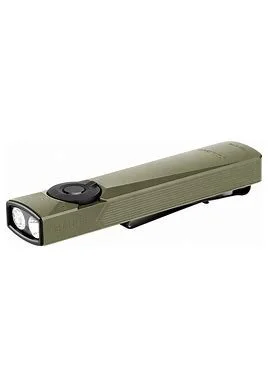
In an unexpected moment of darkness, most people instinctively reach for their phone. But here's the problem: smartphone lights are weak (typically 50-100 lumens), drain your battery quickly, and one drop can leave you without light *and* communication.
In this guide, I'll break down everything you need to know to choose the right EDC flashlight, from lumens and beam patterns to battery types and durability ratings. I'll also share honest recommendations across every price range, including lights we carry at SFT Gear and lights we don't but still respect. Because this isn't a sales pitch. It's a resource built on real-world experience.
How to Choose an EDC Flashlight
Before you spend a dollar, you need to understand what separates a quality EDC light from the junk that floods Amazon. Here are the factors that actually matter.
Portability and User Interface
A flashlight is only useful if it's on you when you need it. An EDC light must be compact and lightweight enough to disappear into a pocket or clip discreetly onto a belt. It also needs a simple, intuitive user interface that allows quick, straightforward activation without fumbling in the dark.
In my experience, the simpler the interface, the more likely you are to actually carry and use the light. A single tail switch with momentary-on capability covers 90% of what most people need. Some lights add a secondary switch for mode cycling. That's fine as long as it doesn't complicate the basics. Stay away from lights that require you to memorize complex click sequences just to change brightness.
Form factor matters here too. Traditional tube-shaped lights have been the standard for decades, but the trend toward flat, rectangular designs (like the Olight Arkfeld series and SureFire Stiletto) is gaining ground for good reason. Flat lights sit in a pocket like a folding knife. Less bulk, less printing, and they don't roll off a table.
Lumens: Understanding Light Output
Lumens measure how much total light your flashlight produces. You'll see lights boasting 5,000+ lumens, but for an EDC light, more isn't always better. Here's a practical breakdown:
The key is versatility. You want a light with multiple output modes so you can match the brightness to the task without blinding yourself indoors or wasting battery outdoors.
Beam Pattern: Throw vs. Flood
Beyond raw lumens, how a light distributes that output matters just as much. This comes down to two characteristics: throw and flood.
Throw is a tight, focused beam that reaches long distances. It's measured in candela (beam intensity) and meters (rated distance). A high-throw light can spot an object hundreds of meters away. Useful for scanning a field, checking a fence line, or identifying something at the end of a long hallway.
Flood is a wide, dispersed beam that illuminates a broad area up close. Think of it like the difference between a spotlight and a floodlight. Flood beams are ideal for working under the hood of a car, searching a room, or navigating a trail where you need to see everything around you.
The best EDC flashlights provide a balanced beam: a defined central "hotspot" for distance viewing, surrounded by a softer "spill" that lights up your immediate surroundings. Some lights achieve this through smooth reflectors, others use TIR (Total Internal Reflection) optics for a cleaner, more even beam profile.
For most EDC purposes, a balanced beam is the right call. If you need a dedicated thrower for search-and-rescue or long-range identification, that's a separate tool.
Durability and IPX Ratings
A tool is only as good as its construction. For an EDC flashlight, this means:
Materials: Look for bodies machined from anodized aluminum (typically 6061-T6 aerospace-grade alloy). This material handles drops, impacts, and general abuse in real-world conditions. Some premium lights use stainless steel or titanium, but aluminum strikes the best balance of weight, durability, and cost.
Impact resistance: Quality lights are rated for drops from at least 1 meter onto concrete. Better lights are rated for 1.5–2 meters.
Ingress Protection (IP) ratings tell you how well a light resists water and dust. The code has two digits: the first rates dust protection (0–6), the second rates water protection (0–9). An "X" in either position means that rating wasn't tested.
For a light you're trusting your safety to, IPX7 or higher is non-negotiable.
Power Source: Rechargeable vs. Disposable
This is one of the biggest decisions in choosing an EDC light, and there are real trade-offs either way.
Rechargeable lithium-ion batteries (typically 18650, 21700, or proprietary cells) are the modern standard. They deliver higher output, hold more energy, recharge conveniently via USB-C, and save money over time. Most serious EDC lights now use rechargeable batteries as their primary power source. The downside: if your battery dies in the field and you don't have a way to recharge, you're out of luck.
Disposable batteries (AA, AAA, CR123A) are universally available. You can find AAs at any gas station on the planet. This makes disposable-powered lights excellent for emergency kits, go-bags, and situations where you can't count on access to a USB port. The trade-off is lower output, shorter runtime, ongoing cost, and more waste.
Dual-fuel lights accept both rechargeable and disposable batteries, giving you the best of both worlds. The Streamlight ProTac 2L-X is a great example. It runs on a rechargeable 18650 but also accepts CR123A batteries as a backup.
Proprietary charging systems (like Olight's magnetic puck) are convenient if you're committed to one brand, but they limit your options. If you lose the charger, you can't just grab a USB-C cable. For maximum flexibility, look for lights with standard USB-C charging ports built into the body.
LED Technology and Color Temperature
This is a topic most guides skip, but it matters for real-world performance.
Modern flashlights use LED emitters, and the specific LED affects output, beam quality, and color rendering. You don't need to memorize model numbers, but understanding color temperature is genuinely useful.
Cool white (5700K–6500K): The most common tint in production flashlights. Produces a bluish-white light that looks bright on paper but can wash out colors and create harsh glare, especially in fog, rain, or dusty conditions.
Neutral white (4000K–5000K): A warmer, more natural-looking light. Better color rendering means you can more accurately distinguish details. Important for identifying objects, reading trail markers, or assessing injuries. Slightly lower lumen numbers on paper, but often looks better to the human eye in practice.
High CRI (Color Rendering Index): Some LEDs are rated for CRI 90+, meaning they render colors very close to how they appear in daylight. This isn't just a nice-to-have. In law enforcement, medical, or hunting applications, accurate color rendering can be critical.
If you have the choice, neutral white with good CRI is the better option for most real-world tasks. Cool white isn't bad, it's just not optimal.
Battery Safety
This doesn't get enough attention: lithium-ion batteries can be dangerous if mishandled. A few rules to live by:
Use single-cell lights for EDC. If your flashlight runs on one 18650 battery, never stack two CR123A batteries in its place just because they physically fit. Mixing battery chemistries or stacking cells without proper protection circuits can cause overheating, venting, or in rare cases, explosion.
Buy batteries from reputable brands. Stick with cells from the flashlight manufacturer or known battery brands. Cheap, off-brand 18650s from unknown sellers are a genuine safety risk.
Don't leave batteries in extreme heat. A flashlight sitting on your car dashboard in summer is a bad idea. Lithium-ion cells degrade rapidly in high heat and can become unstable.
Inspect your batteries regularly. If a battery shows any signs of swelling, denting, or damage to the wrapper, replace it immediately. Don't take chances.
Best EDC Flashlights by Category
I've organized these recommendations by use case so you can find the right light for how you actually live. I've included lights we carry at SFT Gear and lights we don't, because a comprehensive guide should be comprehensive. Where we sell a product, I've noted it.
Best Budget EDC Flashlight: Streamlight MicroStream USB
~$35If you've never carried a dedicated flashlight and you want to start without overthinking it, this is the one. The MicroStream USB has been a go-to recommendation in the EDC community for years, and for good reason.
At 250 lumens on high and 50 lumens on low, it covers the range of tasks most people encounter daily. The form factor is about the size of a marker. It clips to a pocket, a hat brim, or the inside of a bag and basically disappears. The tail switch is dead simple: click for on, click for off, half-press for momentary.
The built-in USB charging eliminates the battery hassle, and the machined aluminum body with Type II MIL-SPEC anodizing makes it tougher than it has any right to be at this price point. The only real limitation is the IPX4 water resistance. It'll handle rain and splashes, but don't drop it in a puddle.
Best Flat EDC Flashlight: Streamlight Wedge SL
~$70Most EDC flashlights are cylinders. The Wedge SL isn't. At 0.28 inches thin and 1.14 ounces, it's the flattest light on this list — closer in profile to a carpenter's pencil than a traditional flashlight. It drops loose into a pocket without printing, without rolling off a table, and without adding meaningful weight to your carry.
The output story is a two-part answer. Day-to-day, the Wedge SL runs at 100 lumens on high — adequate for most tasks and easy on the battery. When you need more, a three-second press of the tail switch activates THRO mode: a 500-lumen burst on demand. It's momentary only, which keeps heat and battery drain in check. You get the horsepower when you need it without burning through your charge just running high all evening.
USB-C charging is the right call here — no proprietary cable, no magnetic puck, just the same port as your phone. A four-level battery indicator shows charge remaining in 25% increments so you're never guessing. The reversible stainless steel clip handles left or right-hand carry.
The honest trade-off: 100 lumens constant-on high is the practical ceiling for extended use. If you regularly need sustained high output, the EDC29 below is the better tool. But if your priority is a flat light that genuinely disappears into a pocket while still delivering a capable burst when it counts, the Wedge SL earns its place.
* THRO is a momentary burst mode activated by a 3-second press. Constant-on high = 100 lm.
Best Mid-Range EDC Flashlight: Nitecore EDC29
~$80–110This is the light that punches well above its weight class. The EDC29 packs serious lumens into a flat, slim package that carries more like a folding knife than a traditional flashlight. What makes this light practical is its range of modes, from a usable low all the way up to that turbo blast when you need to flood a parking lot with light.
The flat design is the real selling point for EDC. It sits in a pocket without the cylindrical bulk that makes most high-output lights uncomfortable to carry all day. Dual tail switches provide intuitive control, and the anti-slip texture ensures a confident grip even in wet conditions.
Built-in USB-C charging keeps things simple, and the IP54 dust/splash resistance is adequate for daily carry, though it's the weakest rating on this list. If you regularly work in heavy rain or around water, consider the Fenix PD36R Pro instead.
Best All-Around EDC Flashlight: Olight Arkfeld Pro
~$85The Arkfeld Pro is the Swiss Army knife of EDC flashlights. Its unique flat rectangular design makes it one of the most comfortable lights to pocket-carry. It genuinely disappears next to your phone. But the real trick is the triple-function design: white LED, UV light, and green laser pointer, all accessible via an intuitive selector dial.
The white LED puts out a respectable 1,300 lumens with a clean, balanced beam. The UV light is legitimately useful for inspecting currency, checking for pet stains, finding scorpions (if you're in the Southwest), or verifying documents. The green laser is a nice bonus for pointing and presentations.
IPX7 water resistance means this light can handle a dunk, and the magnetic charging system makes topping off the battery effortless, though the proprietary charger is a double-edged sword if you lose it.
Best Tactical/Duty EDC Flashlight: Fenix PD36R Pro
~$120If you need a light that transitions seamlessly from daily carry to serious duty use, the PD36R Pro is hard to beat. This is the light that gets recommended over and over by law enforcement, military, and security professionals, and the reviews from actual users back it up.
The 2,800-lumen turbo mode throws light over 1,200 feet (380 meters), giving you positive identification at distance. But what makes this light special is the sustained output: after stepping down from turbo, it maintains 1,000 lumens for over two hours. That's real working output, not a spec-sheet gimmick.
The dual tail switch design is glove-friendly and intuitive. One switch for on/off and mode cycling, a second for instant strobe access. The 5,000mAh 21700 battery provides up to 42 hours of runtime on low mode and charges via USB-C in about three hours.
Built from aircraft-grade aluminum with an IP68 rating (fully dustproof and waterproof to 2 meters), this light can take serious abuse. It's slightly larger than the pocket-sized options on this list, but if you regularly need high performance and long runtime, the trade-off is worth it.
affiliate link — see disclosure below
Best Premium EDC Flashlight: SureFire Stiletto Pro II
~$340This is the "buy once, cry once" option, and the light that dominates virtually every premium EDC flashlight ranking.
The Stiletto Pro II delivers 1,500 lumens through twin hybrid beam optics that provide both long-range throw (375 meters) and enough surrounding spill for situational awareness. The dual-switch design gives you a primary switch for cycling through low/medium/high and a tactical tail switch that goes straight to max output and strobe.
What justifies the price is the build quality and the pedigree. SureFire is one of the few brands that manufactures in the USA, and the Stiletto Pro II is machined from Mil-Spec hard-anodized aluminum with a Melonite-coated pocket clip that won't quit. The slim profile sits in a pocket like a knife, and the switches are programmable. You can reverse the activation sequence to suit your preference.
Is it worth three times the price of the Fenix PD36R Pro? That depends on how much you value American manufacturing, SureFire's legendary warranty, and the specific ergonomics of the Stiletto design. For most people, the Fenix is the smarter buy. But if you want the best and you're willing to pay for it, the Stiletto Pro II delivers.
affiliate link — see disclosure below
Best Weapon-Mounted Light: Olight Odin Mini
~$115Purpose-built for rail-mounted tactical applications, the Odin Mini delivers 1,250 lumens with a focused beam that throws 240 meters for positive target identification at distance. The quick-detach mounting system makes it easy to move between platforms, and the included remote pressure switch provides natural activation without changing your grip.
The IPX8 waterproof rating and rugged aluminum alloy body mean this light can handle the worst conditions you'll throw at it. Magnetic charging keeps the system simple and eliminates exposed ports that can collect debris.
This is a purpose-built tool, not an everyday pocket light. If you need a weapon-mounted option that's proven and reliable, the Odin Mini delivers.
Best Dual-Fuel EDC Flashlight: Streamlight ProTac 2L-X
~$65The ProTac 2L-X is a workhorse that's been a favorite among first responders, tradespeople, and preparedness-minded users for years. What sets it apart is its dual-fuel capability: it runs on a rechargeable 18650 battery for daily use but also accepts two CR123A disposable batteries as a backup. That means you're never truly out of power as long as you can find a convenience store.
At 500 lumens on high, it provides solid working output with a focused beam that's great for general-purpose use. The programming allows you to set the light to start on high, low, or strobe. Configure it once and forget about it. Build quality is Streamlight-standard: IPX7 waterproof, impact-resistant, and backed by a lifetime warranty.
It's not the brightest or the smallest light on this list, but the combination of dual-fuel flexibility, proven durability, and a sub-$70 price point makes it one of the best values in the EDC flashlight market.
affiliate link — see disclosure below
| Model | Lumens | Range | IP | Battery | Wt. | Price | Best For |
|---|---|---|---|---|---|---|---|
| MicroStream USB ⭐ | 250 | 68m | IPX4 | Micro-USB | 1.04 oz | ~$35 | Budget / Backup |
| Wedge SL ⭐ | 500* | 80m | IPX4 | USB-C | 1.14 oz | ~$70 | Flat / Minimalist |
| ProTac 2L-X | 500 | 200m+ | IPX7 | 18650 / CR123A | 4.0 oz | ~$65 | Dual-fuel |
| EDC29 ⭐ | 6,500 | 400m+ | IP54 | USB-C | 5.64 oz | ~$80 | Max output |
| Arkfeld Pro ⭐ | 1,300 | — | IPX7 | Magnetic | 3.5 oz | ~$85 | Multi-function |
| Odin Mini ⭐ | 1,250 | 240m | IPX8 | Magnetic | — | ~$115 | Weapon-mount |
| PD36R Pro | 2,800 | 380m | IP68 | 21700 USB-C | 5.96 oz | ~$120 | Tactical / Duty |
| Stiletto Pro II | 1,500 | 375m | IPX7 | USB-C | 5.0 oz | ~$340 | Premium / USA |
* Wedge SL THRO is a momentary burst mode (3-sec press). Constant-on high = 100 lm.
⭐ = Available at SFT Gear | View All Tactical Lights →
Frequently Asked Questions
-
It depends on your priorities. For most people, the Olight Arkfeld Pro offers the best combination of portability, versatility, and performance. If budget is a concern, the Streamlight MicroStream USB is tough to beat for $30. If you need serious output and durability for professional use, the Fenix PD36R Pro is the standard.
-
For everyday tasks, 200-500 lumens is the sweet spot. That's enough to navigate a dark parking garage, search a room, or walk a trail at night. High-output modes (1,000+ lumens) are useful for momentary tasks but aren't practical for sustained use due to heat and battery drain.
-
IPX7 means the flashlight can be submerged in water up to 1 meter deep for 30 minutes and continue to function. The "X" means the dust rating wasn't tested, not that the light isn't dust-resistant. For comparison, IPX4 handles splashes only, IPX8 means continuous submersion beyond 1 meter, and IP68 (no X) means both full dust protection and continuous submersion are rated.
-
For daily EDC, yes. Rechargeable lights deliver higher output, longer runtime per charge, and eliminate the ongoing cost of disposable batteries. The exception is emergency preparedness. For a go-bag or vehicle kit, disposable batteries (or a dual-fuel light like the Streamlight ProTac 2L-X) give you the security of knowing your power source won't degrade from sitting unused for months.
-
Your phone light puts out roughly 50-100 lumens with no focus, no modes, and no durability. Using it drains the battery of your most critical communication device. A dedicated flashlight provides 5-50x more output, is built to handle drops and weather, and leaves your phone available for what it's actually meant to do. A $30 Streamlight MicroStream outperforms any phone light on the market.
-
Throw is a focused beam that reaches long distances, ideal for spotting objects far away. Flood is a wide beam that illuminates a large area at close range, ideal for working in confined spaces or navigating trails. The best EDC lights provide a balanced beam with both a central hotspot (throw) and surrounding spill (flood).
-
SureFire builds excellent products with American manufacturing and a legendary warranty. However, for most users, lights from Fenix, Nitecore, Streamlight, and Olight deliver comparable or superior performance at a fraction of the cost. SureFire makes sense if you specifically value made-in-USA manufacturing, have professional requirements that justify the investment, or simply want the prestige of the brand.
Conclusion: Carry Something
The right flashlight is more than a gadget. It's a non-negotiable part of your everyday preparedness. Whether you're spending $30 on a Streamlight MicroStream or $340 on a SureFire Stiletto Pro II, the important thing is that you carry something.
Don't let a dead phone battery or a flimsy light leave you in the dark. Your readiness depends on having the right tool for the job.
Shop Our Curated Flashlight Collection →
Questions? Email juan@sftgear.com — I personally respond to every message.
This guide is independently researched and reflects our honest assessments. We carry Nitecore, Streamlight, and Olight products at SFT Gear because we believe in them, but we recommend the best tool for the job regardless of whether we sell it. Prices are approximate and may vary by retailer.